
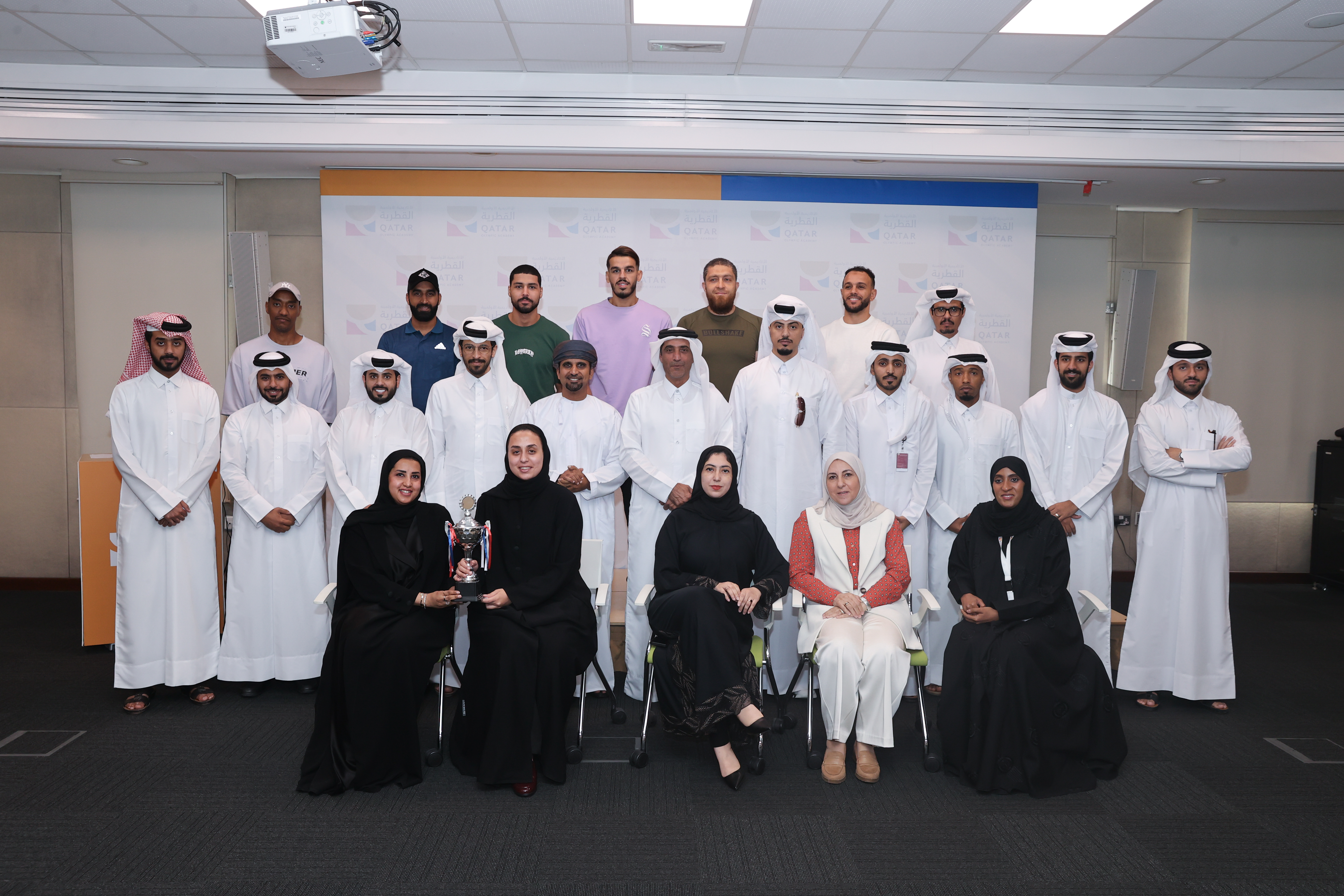
This course serves as the first qualifying stage for participants to enroll in the Advanced Diploma in Sports and Olympic Institutions Management, which the academy organizes each year. The diploma program attracts significant interest from students keen on sports administration, both from within Qatar and abroad. Many sports leaders from the region, particularly the Gulf Cooperation Council (GCC) countries, have graduated from this program.
The course ran for five days, from April 27th to May 1st, with around 35 participants from Qatar and other countries. Attendees came from various sports, administrative, technical, and specialized backgrounds, including international referee Abdullah Al-Adhaba, Mahmoud Abu Nada (goalkeeper for Al-Arabi Club), Mohammed Abdullah (goalkeeper for Al-Shahaniya Club), and Mohammed Jumaa Al-Alawi (player for Mesaimeer Club).
The course was delivered by Prof. Hisham Al-Adwani, Vice President of the Omani School Sports Federation, Director of the Sports Management Diploma Program at the IOC, and an internationally certified lecturer in sports management. He has held numerous administrative positions in Omani sports.
At the beginning of the program, Al-Adwani discussed the concepts of sports management, defined as the art of coordinating work elements and sports production within sports organizations to achieve their goals. He emphasized the importance of setting clear objectives and other key elements that form the foundation of successful sports administration.
He then covered the history of the Olympic Movement and the modern Olympic Games. The ancient Olympics were held in Olympia, Greece, from the 8th century BC to the 5th century AD. The modern Summer Olympics, as we know them today, began in 1896 under the initiative of Frenchman Pierre de Coubertin, founder of the modern Olympic Movement and then-president of the IOC. The first modern Games featured 241 athletes from 14 nations competing in nine sports and 43 events.
The Olympics were suspended during World War I and World War II but later evolved in the 20th century with the introduction of the Winter Olympics for ice and snow sports, the Paralympics for athletes with disabilities, and the Youth Olympics.
Social, economic, and technological changes transformed the Olympics from an amateur-only event to one open to professionals, increasing media attention and corporate sponsorship.
Al-Adwani also discussed Olympic symbols, the Olympic Charter, and Olympic values. The Olympic Charter serves as the constitution of the Olympic Movement, governing the organization of the Games and the regulations set by the IOC. Disputes over interpretation or implementation are resolved by the IOC Executive Board or, in some cases, by the Court of Arbitration for Sport (CAS), established in 1993 as an independent body with 20 arbitrators.
On the fourth day, the lecture focused on administrative skills and steps to develop sports and administrative personnel, which positively impact the achievements of sports federations in both professional and community sports.
The final day covered planning and resource management in sports institutions, followed by an assessment of the participants' learning over the five-day course.
This course is the first qualifying part of the Sports Management Diploma Program. The academy will launch the second qualifying course, "Modern Management of Olympic Sports Institutions," at the end of November. It will cover key topics such as effective communication, workplace management, time management, technical management, event management, and human resource management.
More news
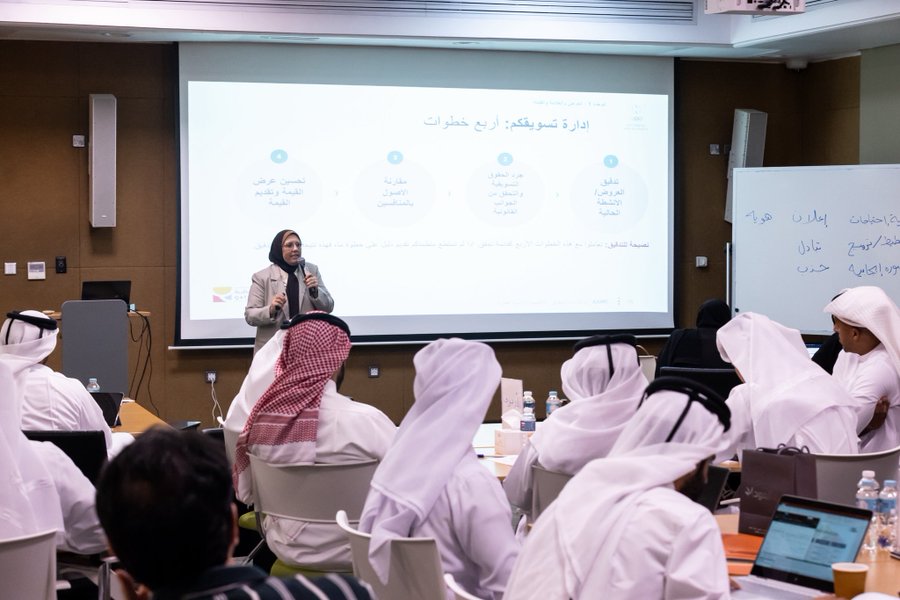
Conclusion of the Fifth Module, “Marketing Management in Sports and Olympic Organizations,” of the Sports Management Diploma Program
Doha, Qatar As part of its mission to develop national and Arab professionals working in the sports sector, the Qatar Olympic Academy continued the delivery of its Sports Management Diploma Program, accredited by the International Olympic Committee (IOC), Olympic Solidarity, and the International Olympic Academy. The Academy recently concluded the fifth module of the program, entitled “Marketing Management in Sports and Olympic Organizations,” held on 12 and 13 October 2026, with the participation of 54 male and female students representing a distinguished group of learners and professionals from sports organizations, committees, clubs, and sports federations, covering a wide range of professional and academic disciplines.
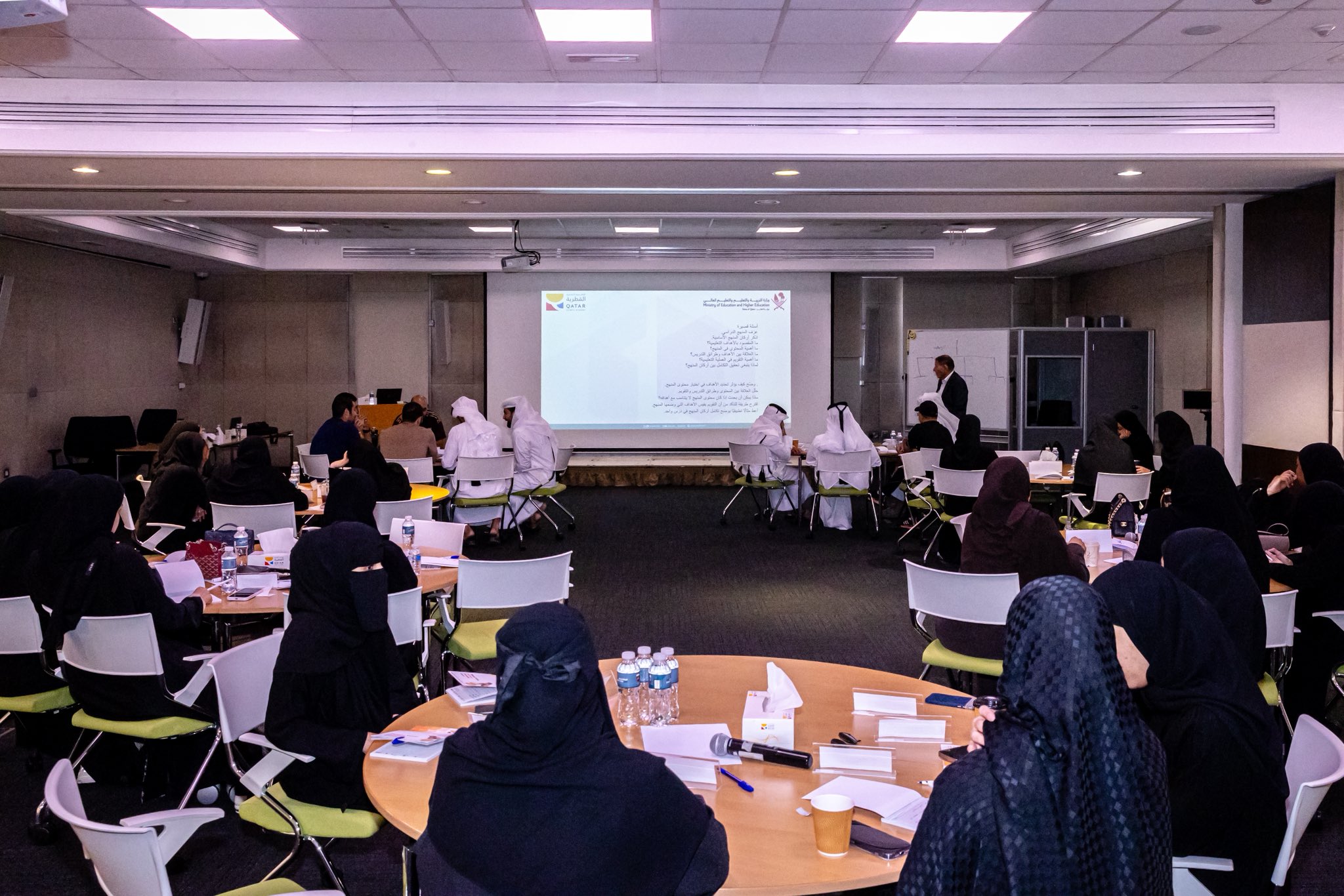
Closing of the Physical Education Teachers Preparation Course in Light of Olympic Values
Doha, Qatar As part of its ongoing efforts to contribute to the development of Qatar’s national sports and educational systems, the Qatar Olympic Academy, in cooperation with the Ministry of Education and Higher Education, successfully delivered the “Physical Education Teachers Preparation Course in Light of Olympic Values.” The course was designed for Level One Physical Education teachers in the State of Qatar and formed part of a comprehensive program aimed at enhancing teachers’ professional competencies and preparing them to keep pace with modern developments in education, physical education, and school sports.

Qatar Olympic Academy Concludes “Sports Policies and Legal Frameworks in Sport” Course
Doha, September 30, 2026 The Qatar Olympic Academy successfully concluded its Sports Policies and Legal Frameworks in Sport course, held over three days from September 28 to 30, 2026, with the participation of professionals and stakeholders from the sports sector both within and outside the State of Qatar. Participants represented various governmental and private sector organizations and came from diverse professional and academic backgrounds.